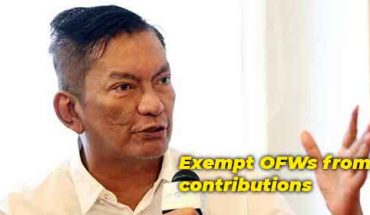





Bryan Revilla is calling for urgent policy reforms to protect the hard-earned remittances of overseas Filipino workers (OFWs), warning that new international charges could erode funds that millions of families rely on for daily survival.
Citing data from the Bangko Sentral ng Pilipinas (BSP), Revilla emphasized that 95 percent of OFW remittances are spent on food and basic household necessities. He stressed that remittances are not symbolic gestures but economic lifelines sustaining Filipino households across the country.
“Every peso sent home represents the blood and sweat of our OFWs. Even a one-percent deduction may seem small on paper, but for families facing rising prices, that reduction is deeply felt,” Revilla said.
Push for the OFW Remittance Protection Act
Revilla renewed his call ahead of the House Committee on Overseas Workers Affairs’ first hearing for 2026 on February 24, where House Bill No. 275, or the OFW Remittance Protection Act, will be tackled.
The proposed measure seeks to establish a comprehensive framework to:
-
Regulate excessive remittance fees
-
Mandate full transparency in exchange rates and service charges
-
Penalize abusive or predatory practices by financial institutions
-
Expand access to free and mandatory financial education for OFWs and their families
According to Revilla, protecting remittances must be treated as an urgent national responsibility, especially as global remittance policies evolve.
Impact of New U.S. Remittance Tax
The lawmaker expressed concern over a new one-percent federal tax in the United States on certain cash-based international remittances that took effect on January 1, 2026. The levy applies to transfers funded by physical instruments such as cash, money orders, and cashier’s checks. Bank and digital transfers remain exempt.
With the United States accounting for approximately 40 percent of total remittance inflows to the Philippines, Revilla warned that the country cannot afford to remain passive.
While digital channels are not covered by the new tax, many overseas Filipinos—particularly those with limited access to banking services or digital financial platforms—may still depend on traditional remittance methods and could be disproportionately affected.
“OFW remittances are more than economic statistics. They are food on the table, tuition for children, and daily survival expenses. Any deduction directly impacts livelihoods,” Revilla added.
Strengthening System-Wide Protections
As Chairperson of the House Committee on Overseas Workers Affairs, Revilla said the upcoming hearing will focus on building durable, system-wide safeguards to shield remittances from unexpected external charges and unfair domestic fee structures.
He also underscored that income protection efforts should complement broader reintegration and welfare initiatives, including the proposed Bagong Balikbayan Act.
“While we continue pursuing long-term domestic job creation, labor migration remains a reality for millions of Filipinos. It is our duty to ensure that when an OFW sends money home, it arrives intact,” Revilla said.
Source Tribune