



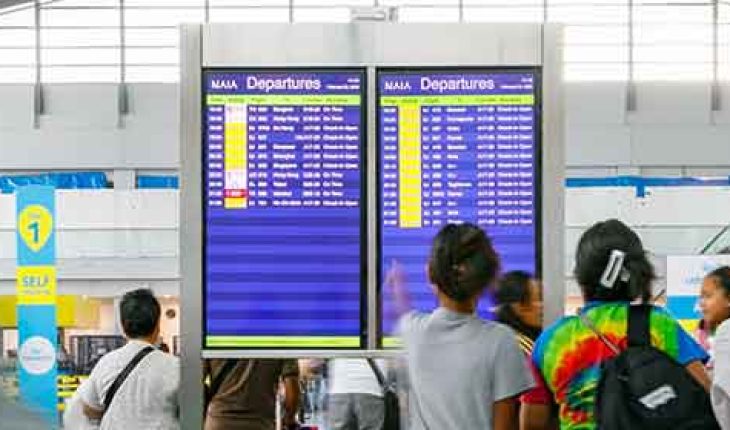
MANILA, Philippines — International travelers may soon face an additional fee when entering or leaving the Philippines as part of a proposed modernization program of the Bureau of Immigration (BI).
Under the planned Civil Aviation and Immigration Security Services (CAISS) project, passengers will be charged a user fee of $4 or around P240 per trip, which means a total of P480 for a roundtrip international journey.
The proposed fee will be added on top of the current P1,620 travel tax already paid by many outbound travelers.
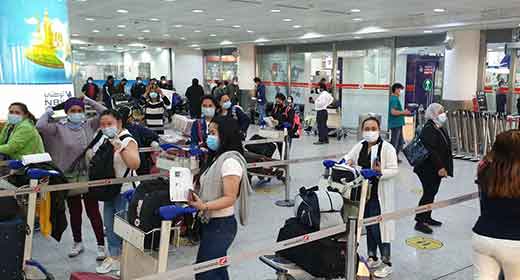
According to project documents posted on the BI website, the new system aims to modernize the country’s border management infrastructure across 11 international airports, one major international seaport, and six mobile border crossing stations.
The project originated from an unsolicited proposal submitted in May 2023 by foreign firm Securiport LLC through the Public-Private Partnership (PPP) Center of the Philippines. The Department of Justice later approved the proposal on Dec. 2, 2025 under Republic Act 11966 or the PPP Code.
The BI described the CAISS project as a major upgrade to the country’s border security capabilities, integrating advanced biometric systems, automated border control technology, and real-time monitoring features into a single platform operated by government personnel.
“The CAISS is a significant upgrade to the Bureau’s border management capabilities in many years,” the BI said in its project document.
The agency added that current border systems are outdated and unable to efficiently integrate with modern international threat databases and real-time biometric verification systems.
Through the project, authorities hope to strengthen national security, improve passenger processing, and enhance the country’s ability to monitor and analyze traveler information.
The total project cost is estimated at P10.7 billion. According to the BI, the Philippine government will not shoulder any direct expenses because the private partner will finance, design, build, and maintain the system under a Build-Train-Maintain-Transfer (BTMT) arrangement.
However, the investment will be recovered through the $4 user fee charged to international passengers over a 20-year concession period.
While many agree that stronger border security is necessary, critics point out that the additional fee will further increase the already high cost of international travel, especially for Overseas Filipino Workers (OFWs), tourists, and frequent travelers.
Aside from airfare, travelers already shoulder fuel surcharges, terminal fees, transportation costs to airports, and government-imposed travel taxes.
As of now, the proposal has yet to be fully implemented, but it is already drawing mixed reactions from the public.